


Primary Health Insurance:
BlueCross BlueShield
United Health Care
Humana
Cigna
North Mississippi Acclaim
Medicare
Medicaid


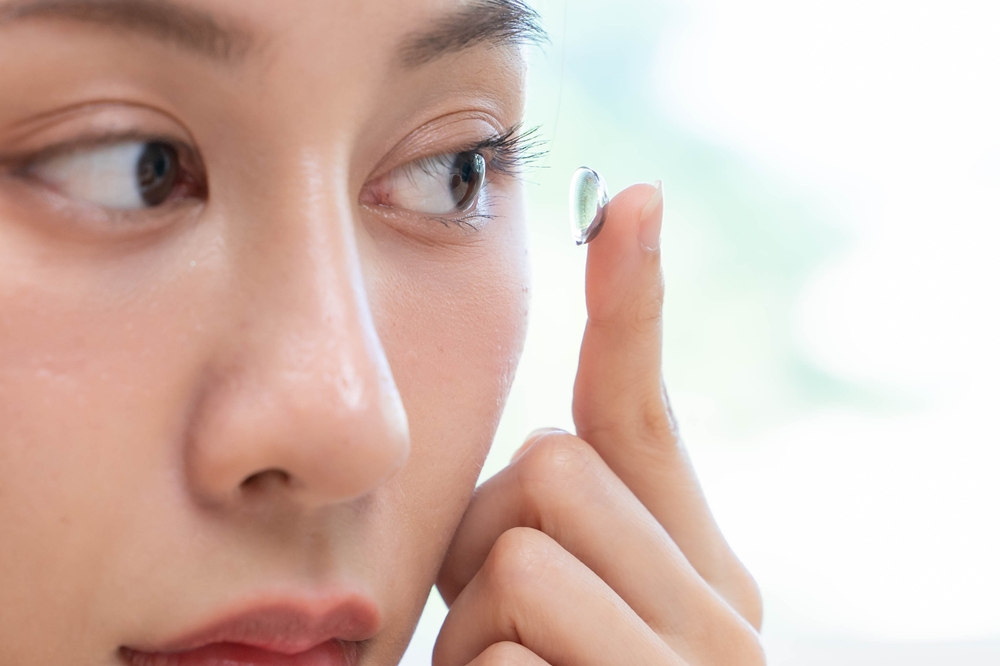
For many people, contact lenses provide clear, convenient vision without the need for glasses. However, not every eye is shaped the same. Some patients struggle with discomfort, blurry vision, or lenses that simply won’t stay in place. At Primary Eye Care, we specialize in evaluating unique vision needs and customizing solutions for patients who haven’t had success with standard contact lenses.
“Hard-to-fit” contacts aren’t a specific brand or type of lens. Instead, the term refers to specialized contact lenses designed for individuals whose eyes require more advanced fitting techniques due to irregularities or medical conditions.
Standard soft contact lenses are designed to fit the average eye. When the eye’s shape or surface differs from the norm, specialty lenses may be necessary to ensure proper vision, comfort, and eye health.
You may need specialty or hard-to-fit lenses if you have:
Keratoconus: Keratoconus is a progressive condition where the cornea thins and bulges into a cone shape, causing distorted vision. Traditional soft lenses often cannot provide clear or stable vision for patients with this condition.
Astigmatism (High or Irregular): While many people with mild astigmatism can wear toric soft lenses, those with high or irregular astigmatism may require rigid gas permeable (RGP) or scleral lenses for sharper vision.
Post-Surgical Eyes: Patients who have had LASIK, PRK, or corneal transplant surgery may experience changes in corneal shape that make standard lenses uncomfortable or ineffective.
Severe Dry Eye: Some patients with chronic dry eye find soft lenses irritating. Scleral lenses, which vault over the cornea and maintain a reservoir of moisture, can significantly improve comfort.
Corneal Scarring or Irregular Corneas: Any condition that alters the cornea’s smooth surface may require customized lenses to restore clear vision.
Presbyopia: Presbyopia is an age-related condition that typically begins after age 40, making it difficult to focus on near objects. Patients who need correction for both distance and near vision may benefit from specialty multifocal, hybrid, or scleral lenses designed to provide clear vision at all
Depending on your eye health and vision needs, your eye doctor may recommend:
Rigid Gas Permeable (RGP) lenses - Provide crisp vision and are ideal for irregular corneas.
Scleral lenses - Larger lenses that rest on the sclera (white part of the eye) and vault over the cornea for improved comfort and stability.
Hybrid lenses - Combine a rigid center with a soft outer skirt for both clarity and comfort.
Multifocal lenses - Designed to correct presbyopia by providing clear vision at multiple distances (near, intermediate, and far) within the same lens. These are available in soft, RGP, hybrid, and scleral designs to meet a variety of vision needs.
Each option requires precise measurements and a detailed fitting process to ensure the best outcome.
Fitting specialty contact lenses requires more time and advanced technology than a routine contact lens exam. During the process, your eye doctor will take detailed corneal measurements, evaluate your tear film quality, and carefully assess your overall eye health. In many cases, corneal mapping (topography) is used to create a precise image of the eye’s surface, allowing for a highly customized fit.
Patients who switch to hard-to-fit lenses often experience:
Sharper, more stable vision
Improved comfort
Better lens stability
Reduced glare and halos
Greater confidence in daily activities
For many individuals who were previously told they couldn’t wear contacts, specialty lenses open the door to new possibilities.
If you’ve struggled with contact lens discomfort or blurry vision, you’re not alone. Hard-to-fit contact lenses are designed specifically for eyes that require more individualized care. With today’s advanced technology and customized lens options, even patients with complex vision needs can enjoy clear, comfortable sight.
Contact Primary Eye Care to schedule a contact lens evaluation and discover whether hard-to-fit lenses are right for you. Visit our office in Tupelo, Mississippi, or call (662) 200-9842 to book an appointment today.
08:30 AM - 4:30 PM
09:00 AM - 3:00 PM
CLOSED
